

Learning center
Siding: cedar, fiber cement, engineered wood, steel, and vinyl.
We install all five, and we will tell you which one your building actually wants. The panel you pick matters. What is behind it matters more, and the only day anybody gets to look at that is the day the old siding comes down.
What siding does
Five jobs, and only one of them is color.
People shop siding like paint. Pick a color, pick a profile, get a price per square. The panel on the wall is doing five things at once, and four of them are invisible from the street.
-
One
It sheds the bulk water
Rain hits the face and runs off. Every siding product on the market does this part. It is the easiest job on the list and the reason people think siding is simple.
-
Two
It gives the water that gets past it a way back out
Wind driven rain gets behind siding. All of it, every product, every install. What decides whether that matters is the drainage plane underneath and whether it is lapped so gravity carries water down and out instead of in. We install a continuous weather barrier, lapped upper over lower, integrated into every window and door flashing, so the water that gets in has a path back to daylight.
-
Three
It lets the wall dry
A wall gets wet. The question is how fast it dries. Trapping moisture against sheathing behind a tight panel is how you get rot under siding that still looks new. Rainscreen furring, ventilated accessories, and the right weather barrier let the assembly breathe.
-
Four
It takes the hits

Hail, ladders, mowers, hockey pucks, and thirty below to ninety five above, every year. Impact rating and expansion behavior are real product differences and they are where the cheap panel shows up.
-
Five
It is the whole first impression of the building
This is the one people admit to caring about, and it is legitimate. On an association it is the difference between a property that shows well and one that does not. Straight courses, clean corners, and trim that lines up are workmanship, not product.
Before new material
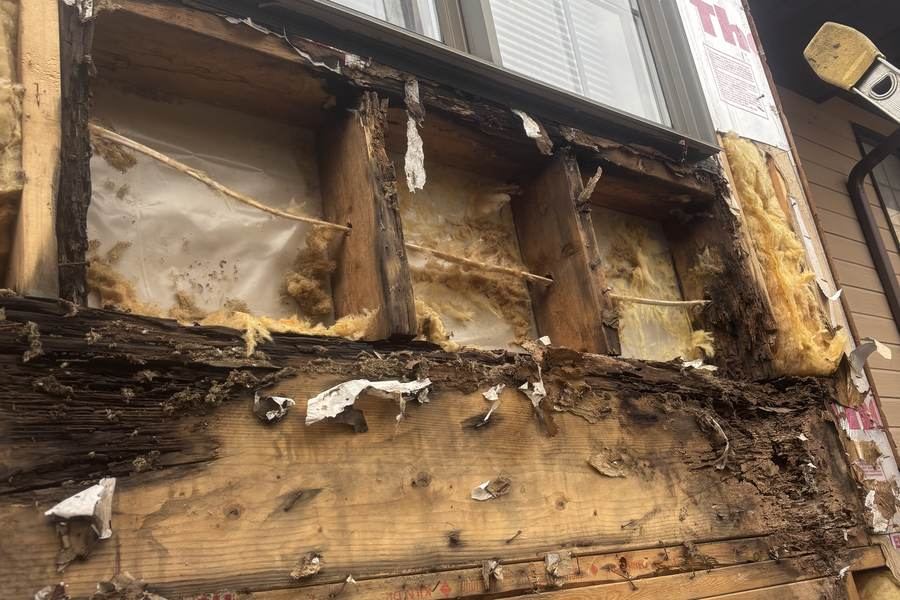
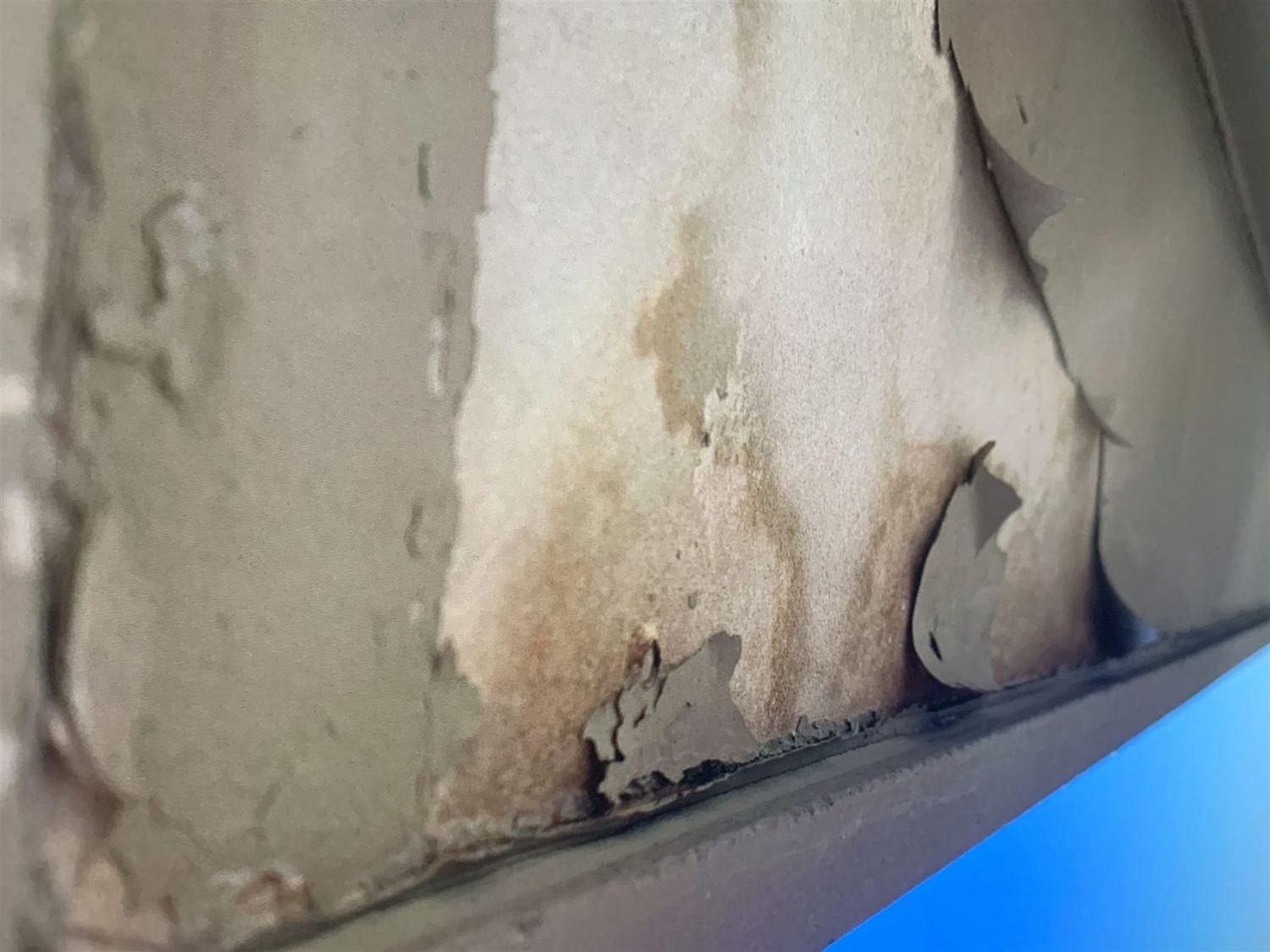
The tear off is the only inspection anybody gets.
Worth remembering
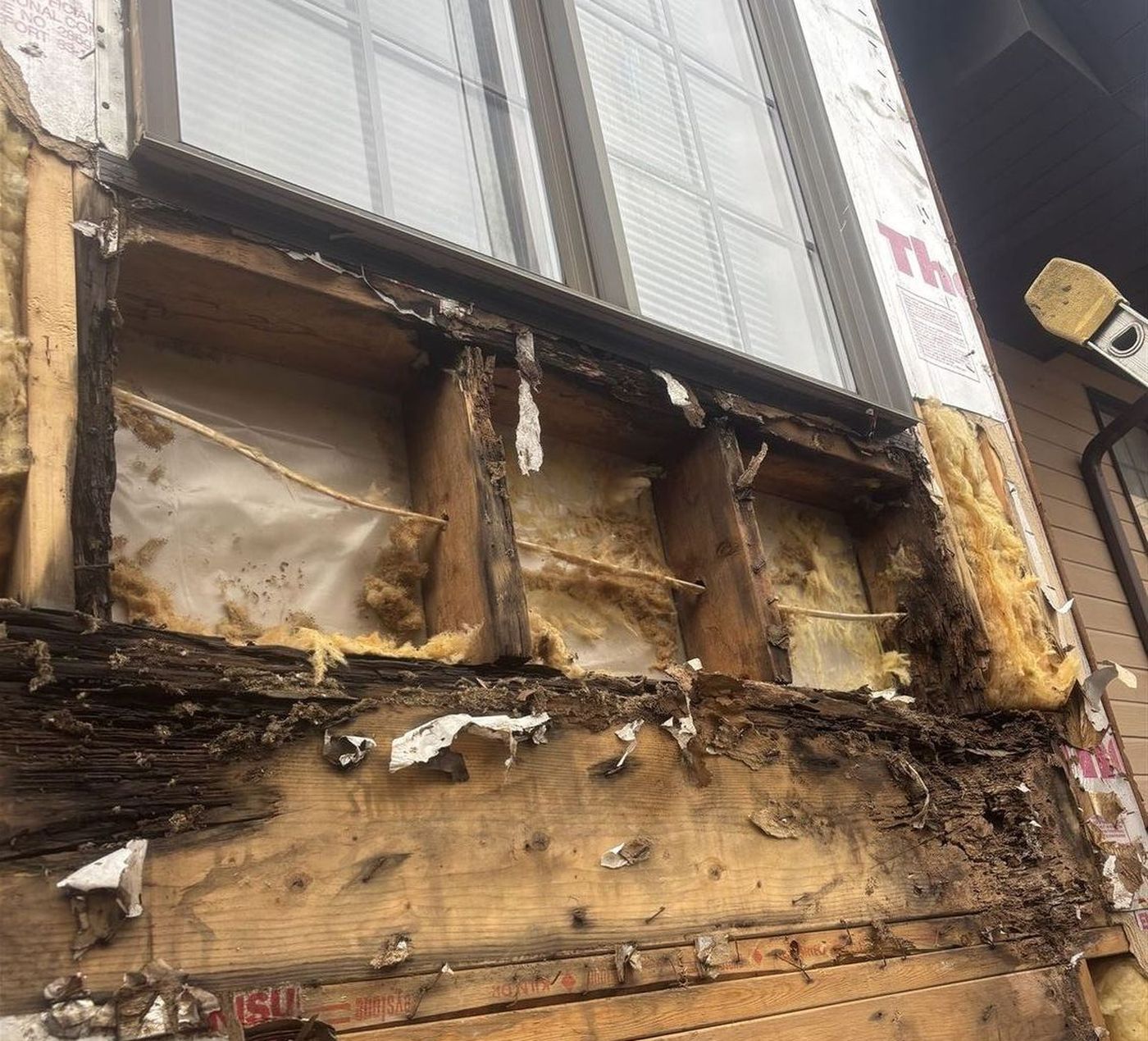
- New siding over soft sheathing fails on the old siding’s schedule. The tear off day is the one day anybody can check, so that is the day to be picky.
This is the part nobody quotes and everybody should. For twenty or forty years the sheathing, the weather barrier, and every window flashing are hidden. They are visible for about six hours.
We check four things and we write down what we find, including the parts that are fine. Whether the sheathing still holds a fastener. Whether the weather barrier is continuous and lapped the right direction. Whether the window head and sill flashings shed water out and away. Whether there is rot in the framing under any of it.
When something is wrong we price the repair before the new material goes on, at a unit price agreed up front so a surprise costs a known number. New siding over bad sheathing fails on the same schedule the old siding did, for the same reason, and no warranty covers it because the failure did not start with the product.
Materials
What holds up in this climate, wood family first.
-
Cedar
Real wood, with real upkeep
Old cedar is beautiful and nothing manufactured looks quite like it. Bevel siding, shakes, and shingles all age into something the synthetics are still trying to imitate.
It asks for the maintenance in return. Stain or paint on a cycle, keep it off the ground, keep the sprinklers off it, and replace the pieces that go before they take their neighbors. Plenty of owners take that trade on purpose and we are glad to keep a cedar building alive. What we will not do is let somebody buy cedar expecting vinyl upkeep.
-
Fiber cement
James Hardie
James Hardie is the name most people mean when they say hardboard, and their Statement Collection is the line built for our climate rather than the coastal one. Non combustible, dimensionally stable, and it holds paint for a long time.
It is heavy to hang and unforgiving about the cut and fastening details, which is exactly why it should not go up by whoever is cheapest. On multifamily it is often the right call and we will tell you when it is.
-
Engineered wood
LP SmartSide
LP SmartSide is engineered wood from LP Building Solutions. Wood strands treated all the way through with waxes, adhesive resins, and zinc borate, then bonded with a resin saturated overlay. Treating through the depth rather than coating the surface is why a cut end does not become the weak point.
The warranty people call 5/50. First five years, 100 percent labor and material. Years six through fifty, material only, prorated 2.22 percent a year. Hail is covered across the term, excluding hail larger than 1.75 inches, material only, after insurance proceeds.
-
Steel
EDCO, the local one
EDCO Products has been making prefinished metal exteriors in Hopkins, Minnesota since 1946, so the line was designed around this climate instead of adapted to it. Steel does not get brittle in cold the way rigid materials can, and it does not dent the way aluminum does.
Read their warranty document rather than the brochure. On EDCO ENTEX, product and labor run twenty years, then material only depreciating ten percent a year to a floor. Fade is covered thirty years. Hail fifty, excluding hail over two inches.
-
Vinyl
CertainTeed and Norandex, the most common thing on the street
CertainTeed runs from basic profiles up to heavy panels and insulated backed siding. Their Monogram line carries a lifetime limited warranty and its RigidForm 210 panel is tested to withstand wind load pressures up to 210 mph. Norandex is the other name you will see all over this metro and it belongs in any honest comparison.
Vinyl is the value answer and a legitimate one when it is the right panel hung correctly. Vinyl has to hang loose. Nails go in the center of the slot and stop short of tight, so the panel can move with temperature. We hang it that way every time. Face nailed vinyl buckles in the first hot week, and that is an installation failure, not a product failure.
Certification
What a certification actually certifies.
The trade body for vinyl and polymeric siding is now the Polymeric Exterior Products Association, formerly the Vinyl Siding Institute. You will still see the old VSI name on plenty of contractor sites and product sheets.
They run two separate programs and people mix them up constantly. The product program certifies that a panel meets the consensus standard for its material, ASTM D3679 for vinyl and related standards for insulated, polypropylene, and backed siding, verified by accredited third party certification bodies. The installer program is about the person on the ladder. It is built on ASTM D4756 and requires two years of experience, a course, an exam, and recertification every three years.
A certified product installed wrong is an uncertified wall. If a contractor names a certification, ask which of the two he means, ask for the certificate, and ask whether the crew that will be on your house holds it or whether the office does.
Trim and details
Failures start at the edges, so that is where we spend the time.

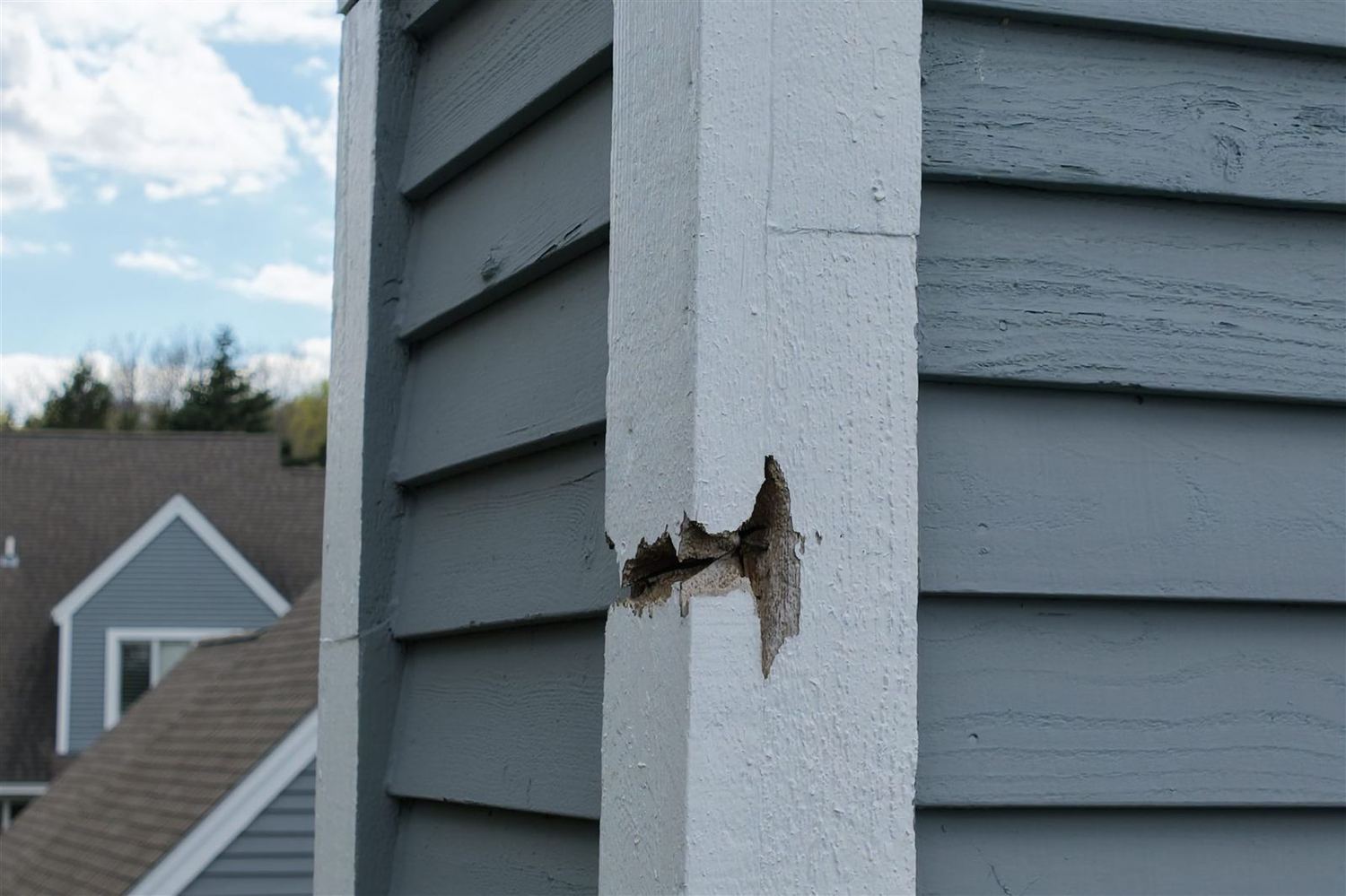
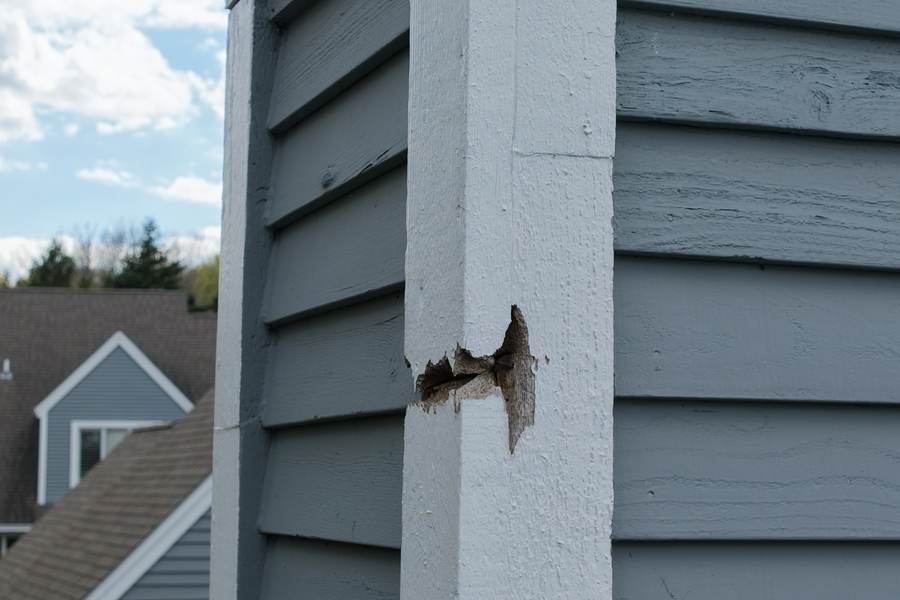
Field siding almost never fails first. Water gets in at the transitions: window heads, door trim, corner posts, the joint where siding meets a deck ledger or a roof line, and any penetration a cable installer added after the fact.
Every one of those gets a real detail from us. Prefinished metal flashing rather than caulk as the primary defense, head flashing lapped over the jambs and under the weather barrier, kick out flashing where a roof meets a wall, and sealed penetrations that are meant to be sealed. Caulk is a maintenance item with a service life measured in a few years. It is the last line, never the first.
The solution
We'll take care of it.
Read all of this or none of it. Either way the next step is the same: have us look at the building. We walk it, we put what we find in writing, including the parts that are fine, and we price the whole fix with a number that holds.