

Learning center
Roofing: asphalt, metal, cedar, synthetic, and flat.
Asphalt shingle, standing seam and steel shingle, cedar, synthetic slate and shake, and flat membrane systems like EPDM and TPO. We install all of them into the same fight: a climate that freezes and thaws while battling storms. What decides how a roof survives that is mostly underneath the part you can see.
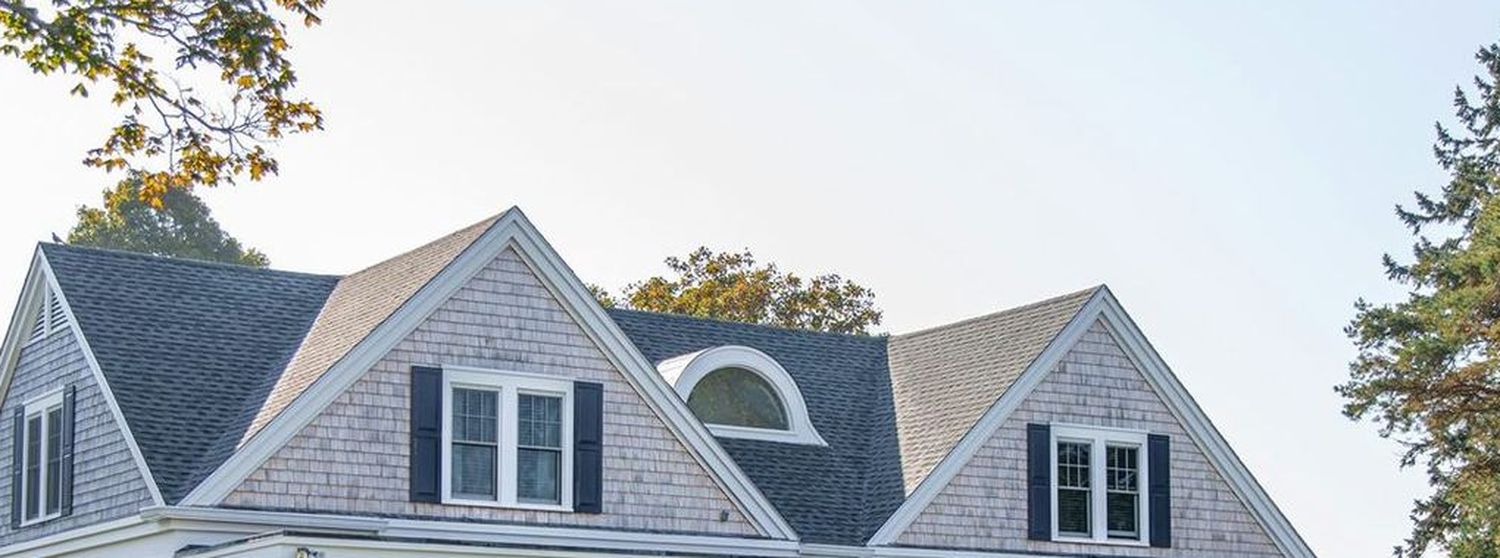
The assembly
Bottom to top, and what we do at each one.
-
The deck
What everything else fastens to
Every shingle manufacturer requires a solid, sound deck as a condition of the warranty, and no manufacturer will honor a claim on shingles fastened into punky sheathing. On a tear off we walk the whole deck before anything goes back on, mark the soft sheets, and replace them. If we can see it, it goes in the estimate as a unit price, so a surprise costs a known number instead of a change order.
-
Ice barrier
The Minnesota layer, and yes, everyone calls it Ice and Water Shield
Grace makes a product called Ice and Water Shield and the name stuck to the whole category, the way people say Kleenex for tissue. Ask ten roofers in this state and ten of them will use it that way, us included. What it actually is: a self adhering membrane, run from the lowest edge of the roof up past the inside face of the exterior wall, so ice backing water up the slope has nothing to get under.
Manufacturers publish how far it has to run, and in a cold climate the answer is farther than most people install. We run it to the manufacturer requirement rather than to the minimum, and on deep overhangs that means more than one course.
On a house with deep overhangs that means more than one course, and we run it that way. Ice dams push water backward up the slope, and this membrane is what keeps that water off your ceiling.
-
Underlayment
The layer people cheap out on

Felt is the old answer and it still works where it belongs. Synthetics are lighter, tear resistant, safer to walk, and they hold up to weather exposure while a job is open. What matters more than the brand is matching the underlayment to the covering going over it and to how the assembly needs to dry.
Breathability is the part that gets skipped. A fully vapor closed underlayment under the wrong assembly traps moisture in the deck, and on an unvented or poorly vented roof that is how you rot sheathing from the inside while the shingles look new. Metal, tile, cedar, and asphalt all want different things underneath them. We pick the underlayment for your roof rather than whatever came off the truck.
-
The covering
Asphalt is one kind of shingle, not the only kind
Architectural asphalt is the workhorse here and it earns that. It is not the only option and we install the others.
Standing seam and metal shingle systems shed snow and last decades. Cedar shakes and shingles look like nothing else and ask for maintenance in return. Synthetic and composite shingles fake slate and shake convincingly with better impact numbers. Slate and tile show up on the buildings that deserve them. On low slope, a membrane, which gets its own section below.
-
Fastening
Nail zone and manufacturer spec, confirmed
Every shingle has a nailing zone, a fastener count, and an exposure printed by the manufacturer. Miss the zone by an inch and the shingle is not fastened the way it was tested, even though the roof looks finished from the ground.
So we check it. Our crews are inspected during the install, not after, and we confirm the nail zones are being hit and that the roof is going together to the manufacturer's printed specification. That is the difference between a roof that carries a warranty and a roof that has a warranty document in a folder.
Flashing
New metal every time.
Worth remembering
- If a bid reuses your old flashings, the price difference is the flashings. That is where the two numbers usually diverge, and it is the part that leaks first.
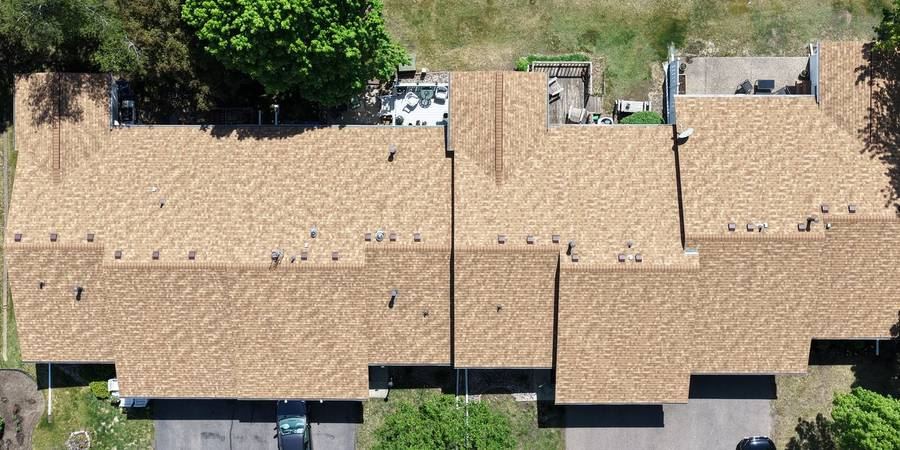
Valleys, step flashing at walls, chimney counterflashing, kick out flashing, pipe boots, and vents. Reusing old flashing on a new roof is the most common corner cut in this trade, and it is why a two year old roof leaks at a wall while the field is perfect.
Here is what we do instead. All new flashings on every roof, in prefinished metal that matches, woven into the assembly rather than laid on top of it. Step flashing behind the siding and over the underlayment, one piece per course. Kick out flashing wherever a roof edge dies into a wall, because that is the detail that dumps water behind siding for years before anybody finds it. Ice barrier and underlayment lapped so every piece of metal is enveloped by the layer above it.
Metal is cheap. Opening a wall in year three is not.
Ventilation
Most roofs fail from the inside.
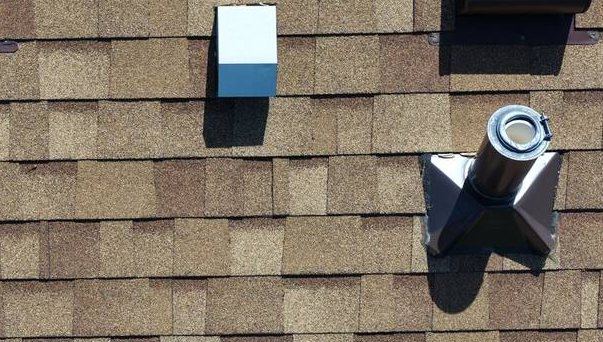
Warm moist air from the house rises into the attic, hits the cold underside of the deck, and condenses. That is frost in an attic in January and stained sheathing in April. It is also how ice dams form, because a warm deck melts snow that refreezes at the cold eave.
The University of Minnesota Extension has the best plain language work on this for our climate, and their order of operations is the right one. Seal the air leaks from the house into the attic first. Insulate to the current standard second. Ventilate third. Ventilation cannot fix a leaky, under insulated ceiling, it can only carry away what is already up there.
When we vent, we balance it. Intake at the soffits, exhaust at the ridge, sized together. Ridge vent with blocked or painted over soffit vents does not exhaust an attic, it pulls conditioned air out of your house through every ceiling penetration you have. We check the intake before we sell you exhaust.
Warranties
We build to the manufacturer, not to the minimum.

Here is something worth saying out loud. Building code is set and enforced by your municipality, and it is different in Burnsville than it is in Woodbury, and it changes. It is the legal floor.
The manufacturer instruction sits above that floor, every time. It is more specific, it is the same in every city, and it is the actual condition of your warranty. GAF writes it into the document in plain language: coverage is conditioned on the shingles being fastened and installed strictly in accordance with GAF's application instructions, and damage from application that departs from those printed instructions is excluded. Every major manufacturer says a version of the same thing.
So that is what we build to, and it is what we talk about. Pulling a permit and passing inspection means the roof is legal. Following the printed instruction means the roof is warranted and it lasts. We do both, and when they disagree we follow the manufacturer.
The big three in this market are GAF, Owens Corning, and CertainTeed. We install all three. There are plenty of other brands, and on the right building one of them is the right answer, whether that is a metal system, a synthetic slate, or a specialty membrane. We pick for the roof, not for the rebate.
Manufacturer warranties come in tiers. The base one comes with the product. The stronger system warranties that cover labor and accessories together for decades are only available through contractors enrolled in that manufacturer's program, and the tier depends on the level the contractor holds.
So ask any roofer two questions. Which warranty tier can you actually register on this job, and will you put the registration confirmation in my hands when it is done. A brochure in a folder is not a registered warranty.
Low slope
Flat roofs do not leak because they are flat.
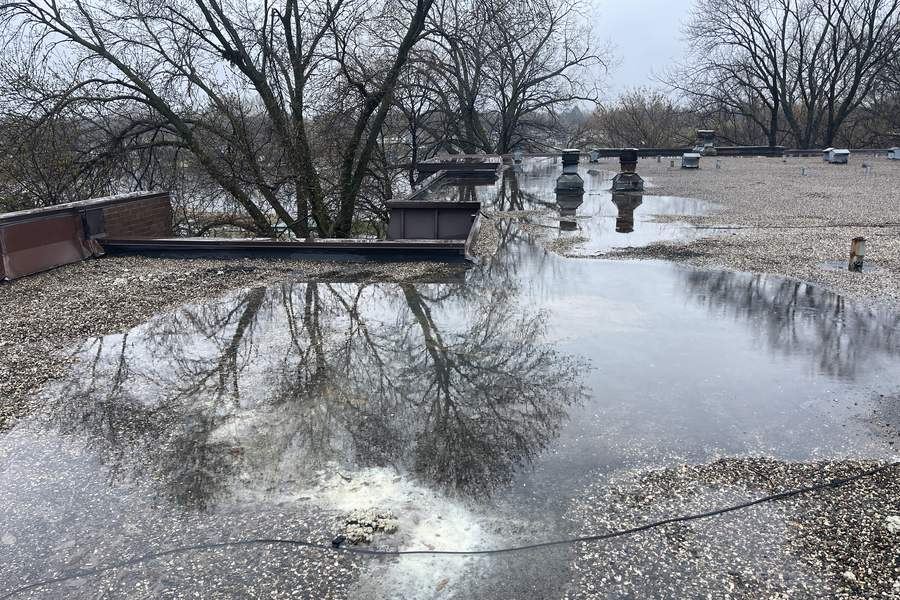
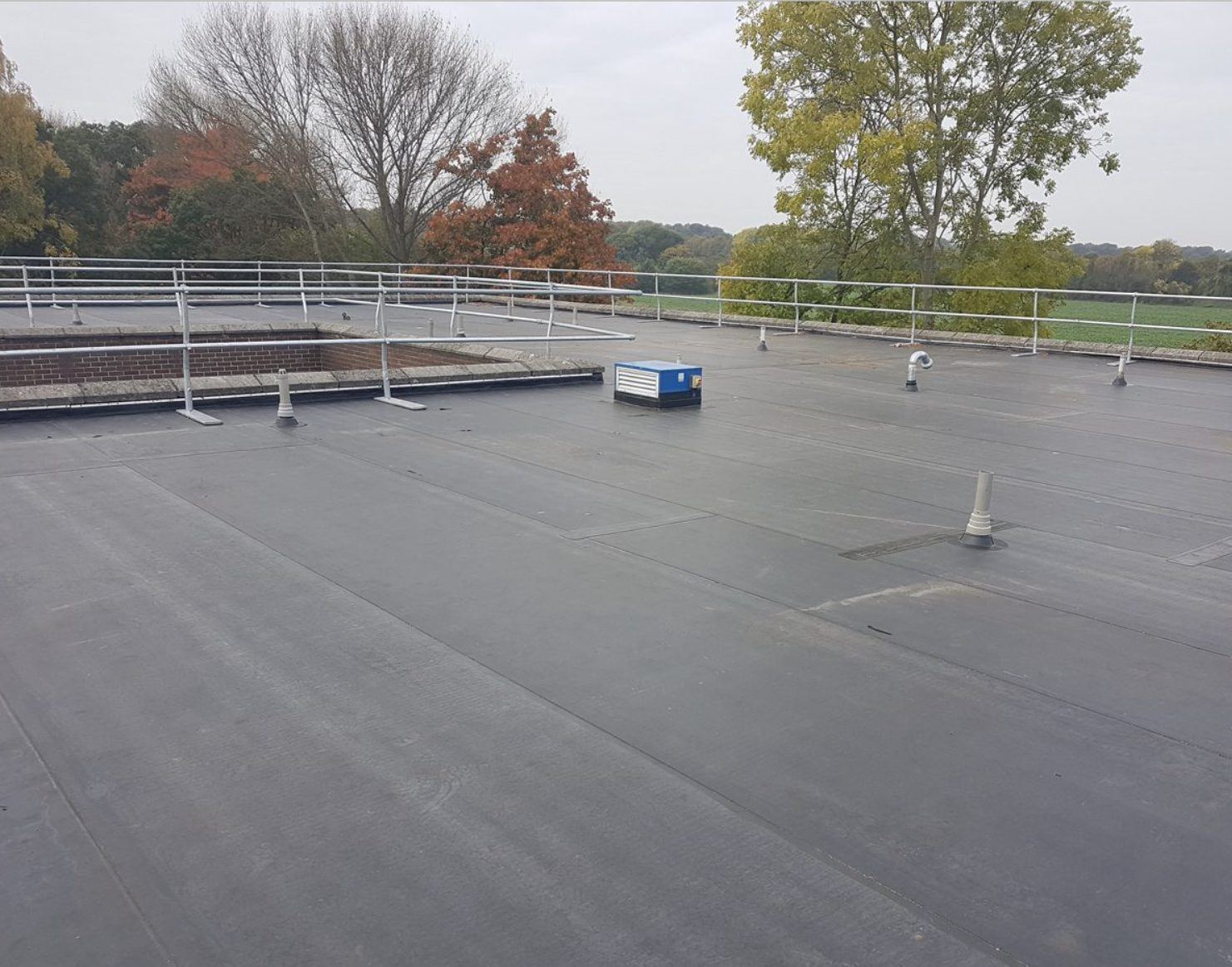
They leak because the water has nowhere to go. A low slope roof is designed to drain, and drainage is slope, drain placement, and whether the insulation under the membrane still holds its thickness.
Water still standing forty eight hours after the rain stopped is the signal. It loads the structure, ages the membrane, and in this climate it freezes and works the seams. Patching under a pond treats the symptom.
What we do is find the actual drainage problem, then install a single ply membrane system sloped to drain, with the perimeter and every penetration detailed as part of the system rather than sealed after the fact.
The solution
We'll take care of it.
Read all of this or none of it. Either way the next step is the same: have us look at the building. We walk it, we put what we find in writing, including the parts that are fine, and we price the whole fix with a number that holds.