

Learning center
Every drop that hits the roof ends up in five inches of aluminum.
A one inch rain on an average roof is over a thousand gallons of water, and the gutter system decides where all of it ends up. When the chain works, it ends up in the yard. When any link fails, it ends up behind the fascia, inside the wall, or standing against your foundation, and you find out months later in the basement.
Worth remembering
Three things to keep in your head about gutters
- Overflow is the trigger. Debris in a gutter is normal. Water coming over the front edge is not. If nothing overflows, you probably do not need the cleaning you are being sold.
- The discharge decides the basement. A downspout dumping at the foundation undoes everything above it. Where the water lands matters more than how clean the trough is.
- Ice dams start in the attic, not the gutter. Tearing off gutters to fight ice treats the wrong end of the problem. Air sealing and insulation treat the right end.
What is in there
The four parts, and what each one has to do.
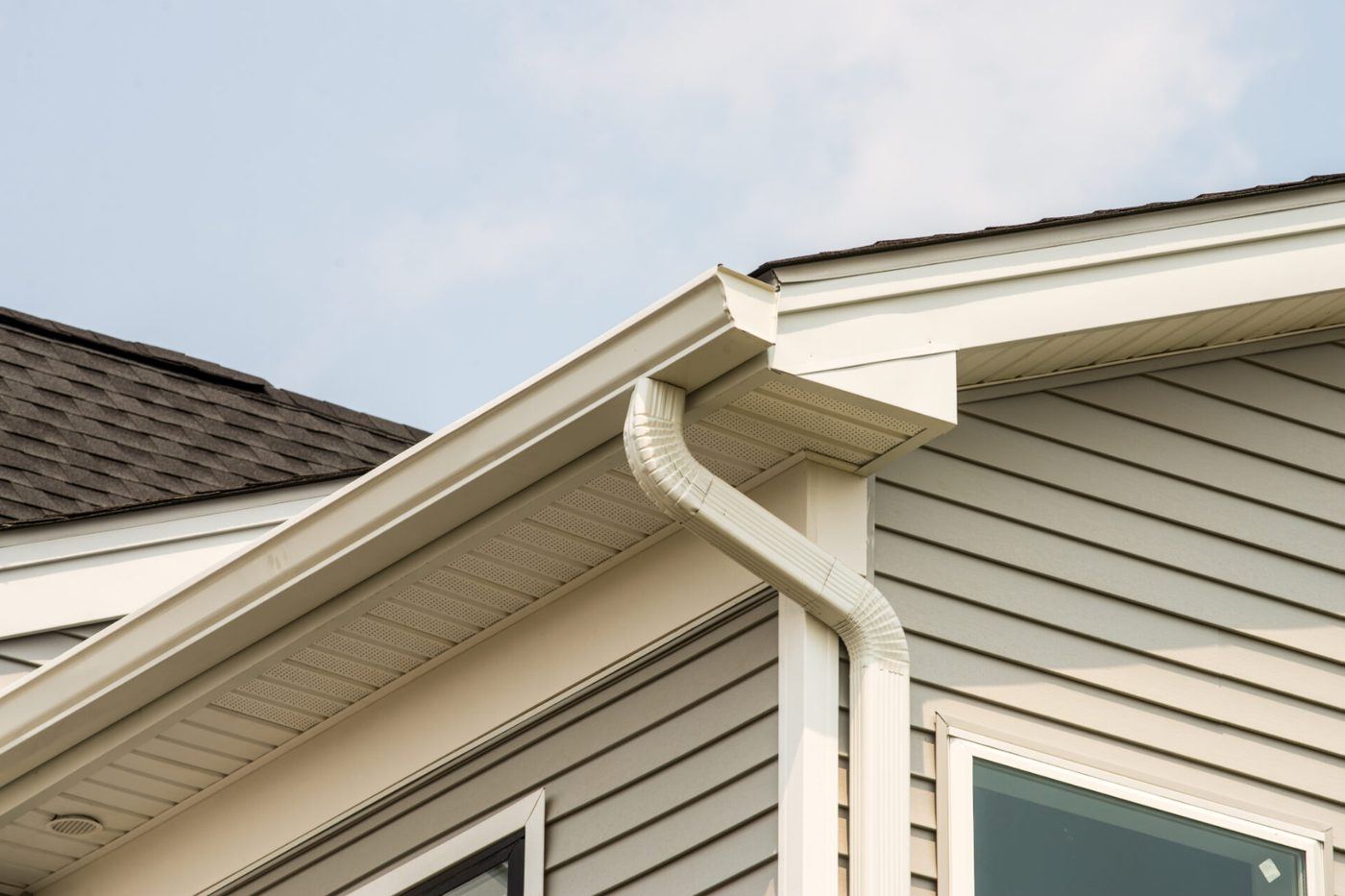
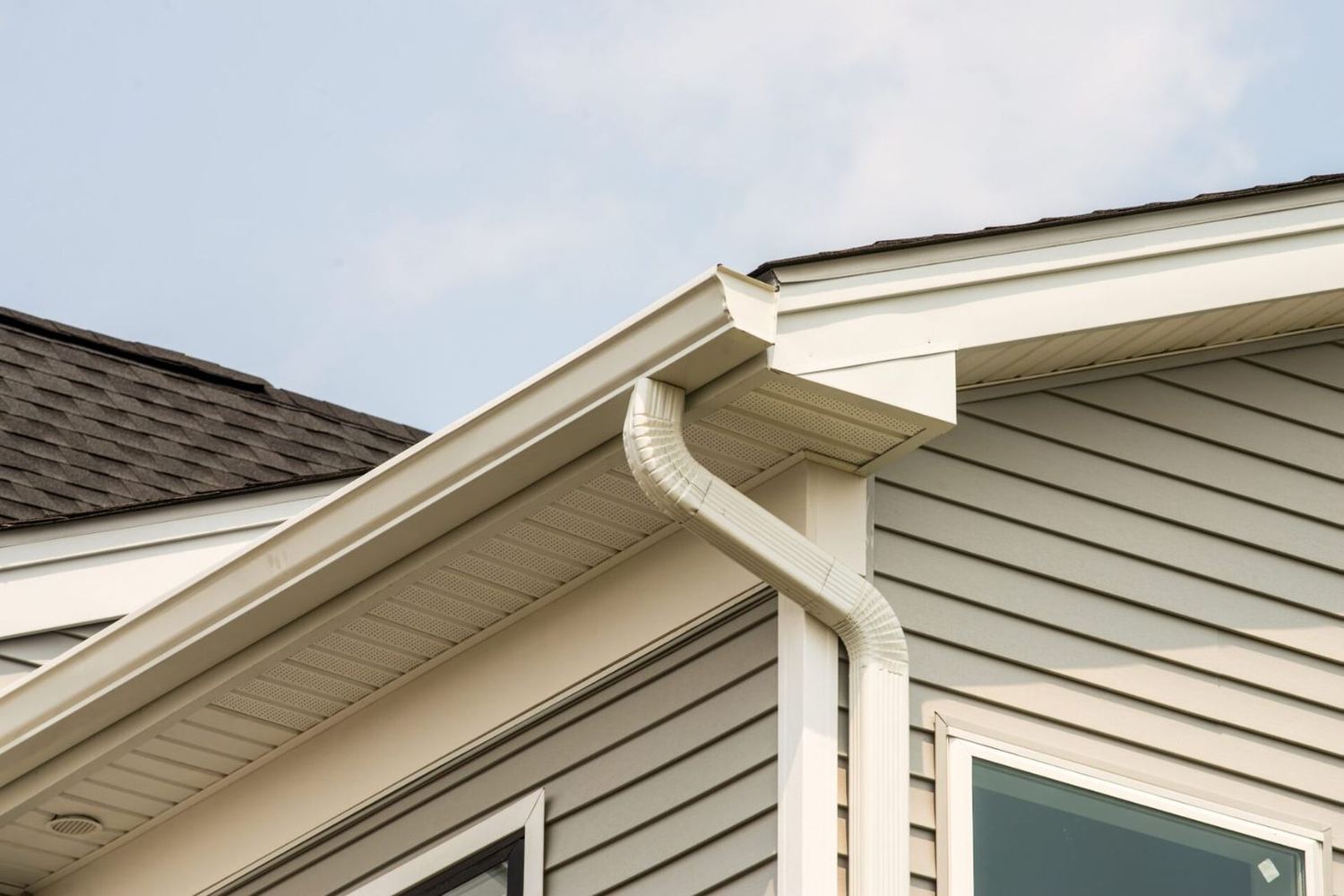
Sizes are simple. Most residential gutter is 5 inch K style with a 2x3 downspout. Larger roofs and most association buildings run 6 inch gutter with a 3x4 downspout, which moves roughly twice the water. Aluminum is the standard material and it is what we hang unless there is a reason not to.
-
The trough
Catch and carry

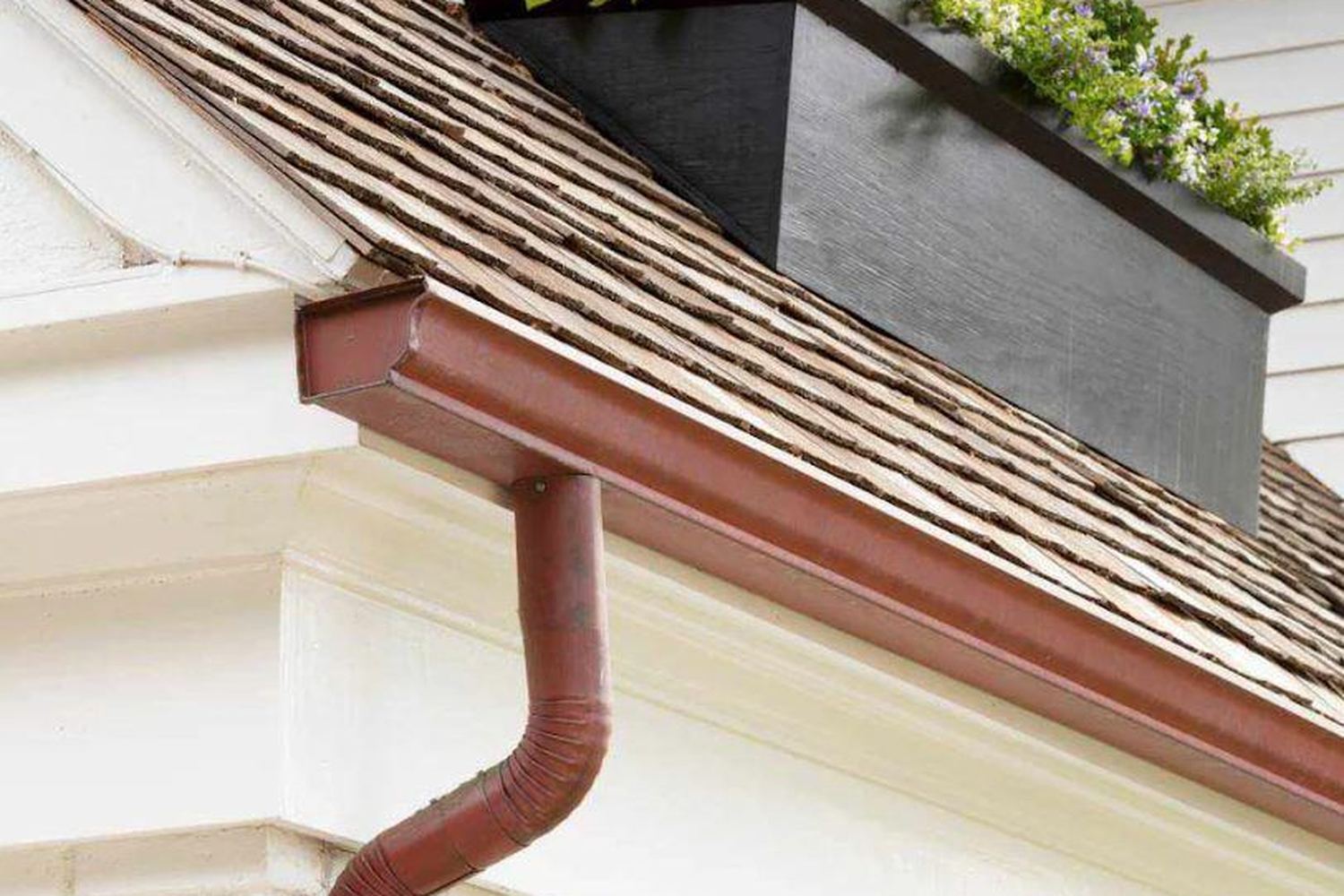
Sized to the roof area feeding it and pitched toward the outlet so nothing sits. Hung so the front edge stays below the roof plane, which keeps water from shooting over the front in a hard rain.
-
Corners and outlets
Where it changes direction
Inside and outside miters, and the outlet that drops into the downspout. Corners slow the water down, so they are the first place debris packs and the first place a bad seam shows.
-
The downspout
Vertical delivery
Straps or brackets holding it flat to the wall, elbows sized to the run, and enough of them that a single downspout is not carrying half the building.
-
The discharge
Where the water actually ends up
Extensions, hinged sections that lift for mowing, splash blocks, or buried drain. This is the part people skip, and it is the part that decides whether you get a wet basement.
What to watch for
Debris, pitch, and discharge.
-
Pitfall
Not all debris is a problem
Two different things end up in a gutter. Granule debris is the grit every asphalt roof sheds, heaviest in the first year and again near the end of its life. It looks like dirty sand in the bottom of the trough and on its own it does not block anything. Leaf debris is the one that matters: leaves, needles, twigs, and seed pods packing the low end of a run and the corners until water backs up.
So we sort them. Granule debris gets noted and left alone unless overflow is occurring. Significant foliage debris gets a thorough clearing. Tree coverage over the roofline is the variable, and two buildings on the same property can need completely different answers.
-
Pitfall
Standing water is a pitch problem
Granule collecting in one spot along a run is evidence rather than the fault. It gathers where water sits, and water sits where the gutter is back draining. Clean that section and it fills again. The fix is re pitching toward the outlet, and if a reroof is coming, that is the right time to hang correctly pitched gutter instead of paying twice.
On an association, a blanket clean-everything bid prices buildings that are clear. We inspect and mark them, and the ones marked clear do not get cleaned or billed. Overflow is the trigger. No overflow, no invoice.
Hardware
The parts that actually fail.
-
Corners
Inside miters full
The inside corner is where a run changes direction and slows down, and it packs first. On buildings with a lot of inside corners that is where every clearing starts. A damaged miter gets replaced with a box miter rather than resealed for the third time.
-
Attachment
Loose gutter and forward hang
A section that hangs forward of vertical spills over the front edge in heavy rain, and from the ground it looks fine. Same for a gutter end bent out of shape or a deformed drip edge at the gutter end. Reattach, add brackets, and straighten it, which is a short list of cheap fixes that stop a lot of water going where it should not.
-
Discharge
Where the water actually ends up
This is the one people skip and it causes the most damage. Extensions cut at the wrong angle, an elbow set so the pitch runs backward, a black drain extension lying in the grass disconnected from the downspout, or discharge dumping right at the foundation.
What we do about it: extend past the rock bed or the edging, set hinges and catch tabs so the extension lifts for mowing and drops back, secure everything with screws instead of hoping, and confirm positive drainage away from the building. Common sizes are a 2x3 downspout on residential and 3x4 on the bigger runs.
Ice
Ice dams, and what actually helps.

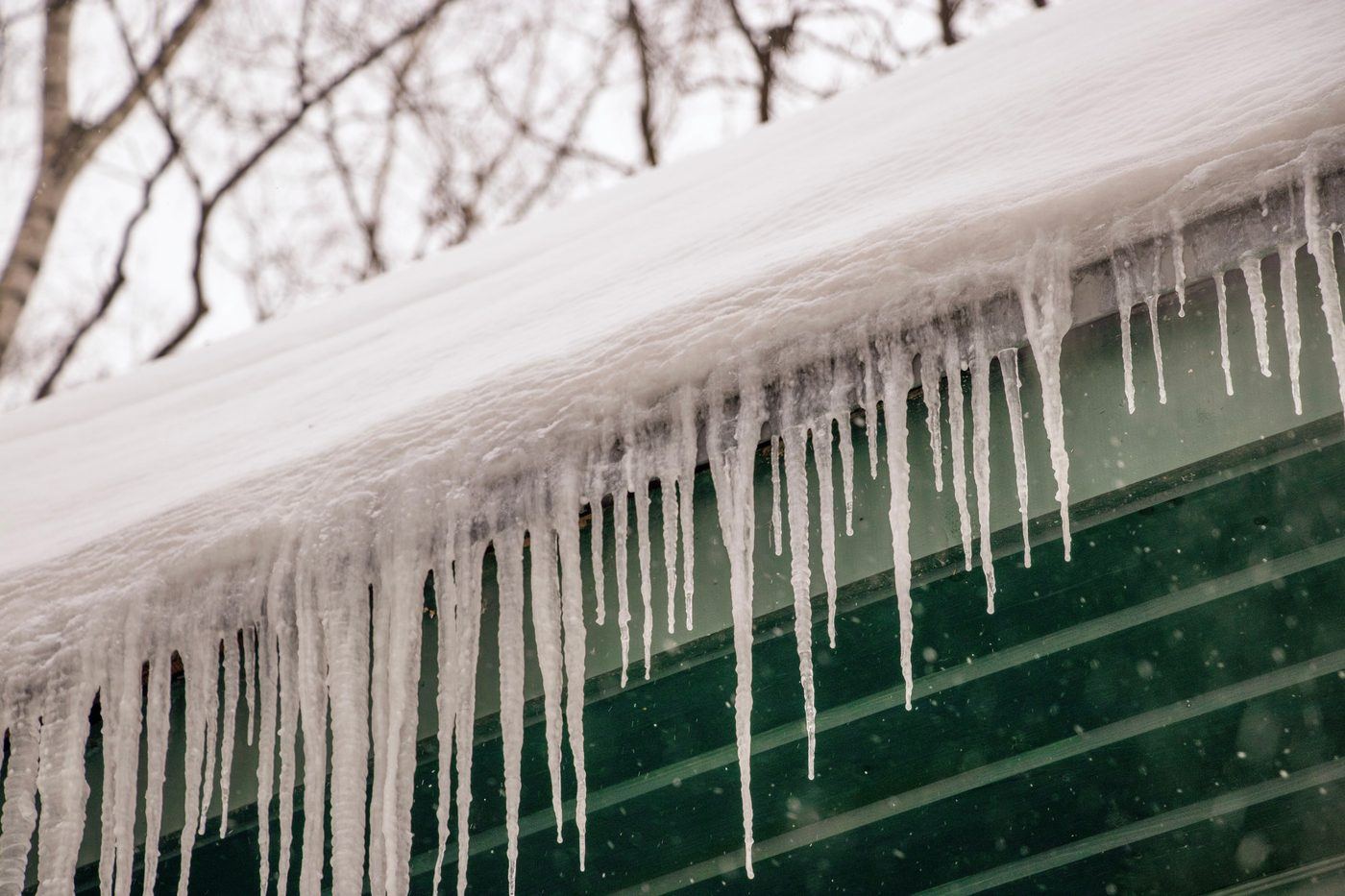
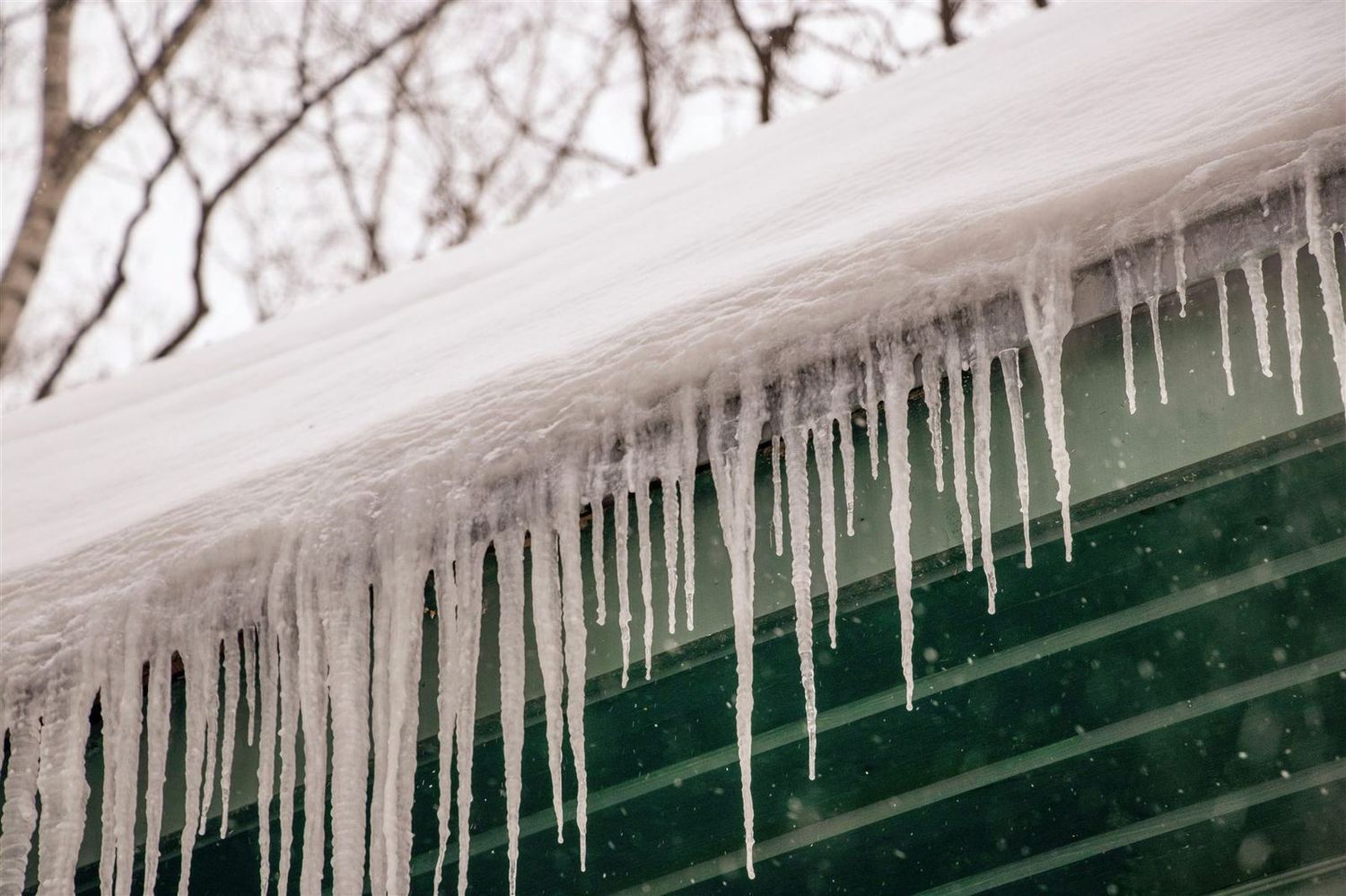
An ice dam forms when heat escaping the building melts snow up the slope and that water refreezes at the cold eave. The gutter is where you see it, and the gutter is almost never the cause.
The order that works is the order the University of Minnesota Extension teaches. Seal the air leaks from the living space into the attic. Insulate to current standard. Ventilate, balanced intake to exhaust. Those three fix the cause.
After that there is mitigation. Roof raking after a heavy snow keeps the load off the eave. De-icing cable, run along the eave, through the gutter, and down the downspout, keeps a drain path open through the winter, and on some buildings with a history of it that is the honest answer. When we see cable already installed in a zigzag along the eaves, we note it for the board as evidence that ice dam mitigation has been necessary here before.
How we inspect
Drone first, ladder where it matters.
We fly the property and photograph every run, then annotate building by building. Clear sections get marked clear. Debris gets located, upper or lower, and named by elevation. You get the images with the report, so the recommendation is something you can look at rather than something you have to take our word for.
Ladders come out where a physical look is the only way to be sure, and we say which is which. Anything we could not evaluate gets stated as not evaluated rather than guessed at.
The solution
We'll take care of it.
Read all of this or none of it. Either way the next step is the same: have us look at the building. We walk it, we put what we find in writing, including the parts that are fine, and we price the whole fix with a number that holds.